New Research Reveals Surprising Dietary Similarities Among Saber-Toothed Cats鈥擯lus, Join Us for a Special Kids’ Day Event at Bridgestone Arena!
Nashville, TN 鈥� April 4, 2025 鈥� A innovative study led by researchers from 国产原创 sheds new light on the dietary ecology of the iconic saber-toothed cat, Smilodon. The study, published in a special issue on sabertoothed organisms in The Anatomical Record, reveals that Smilodon fatalis and Smilodon gracilis鈥攖wo species that lived thousands to millions of years apart鈥攅xhibited surprisingly similar feeding behaviors despite differences in size, morphology, and habitat.
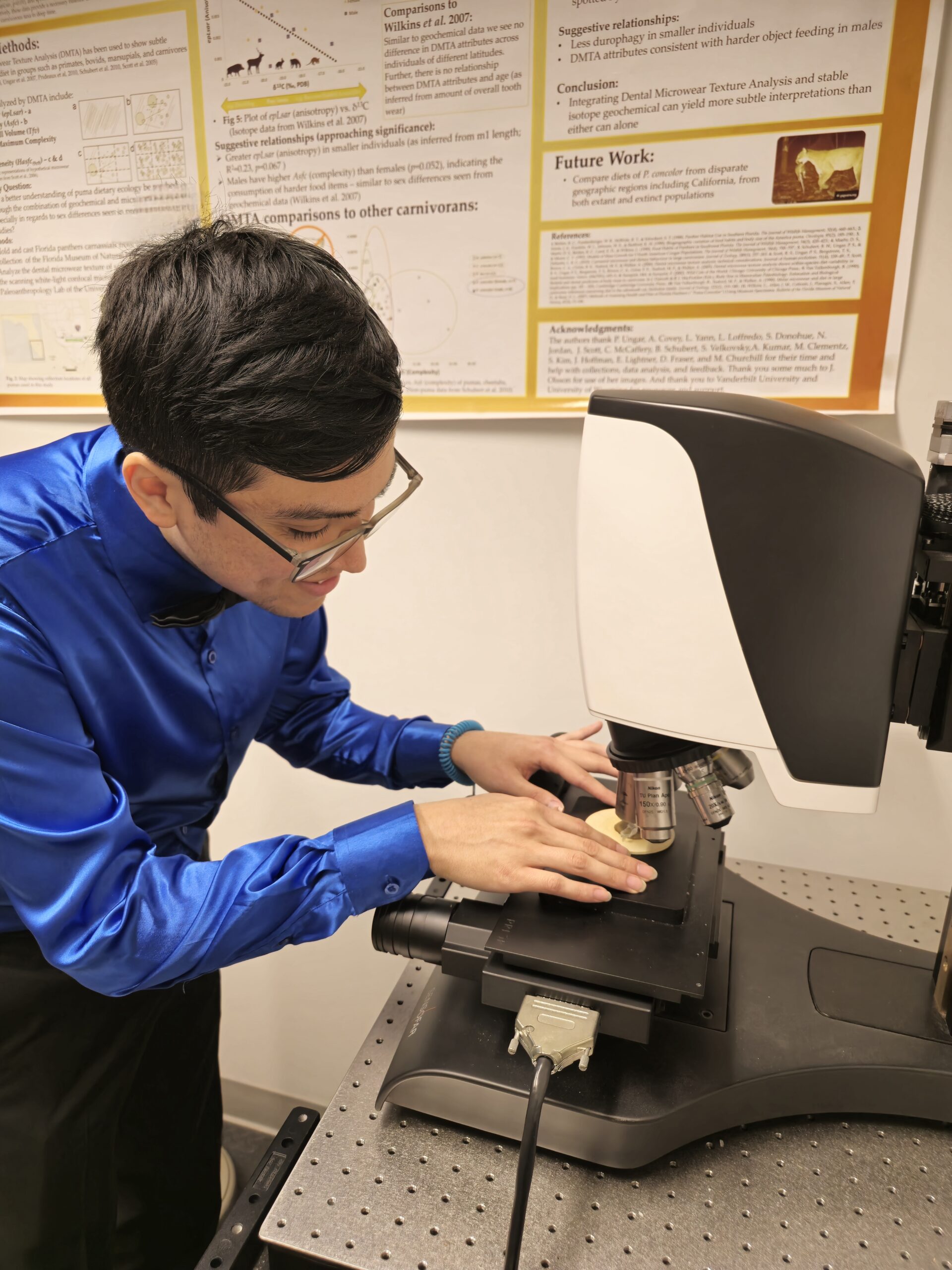
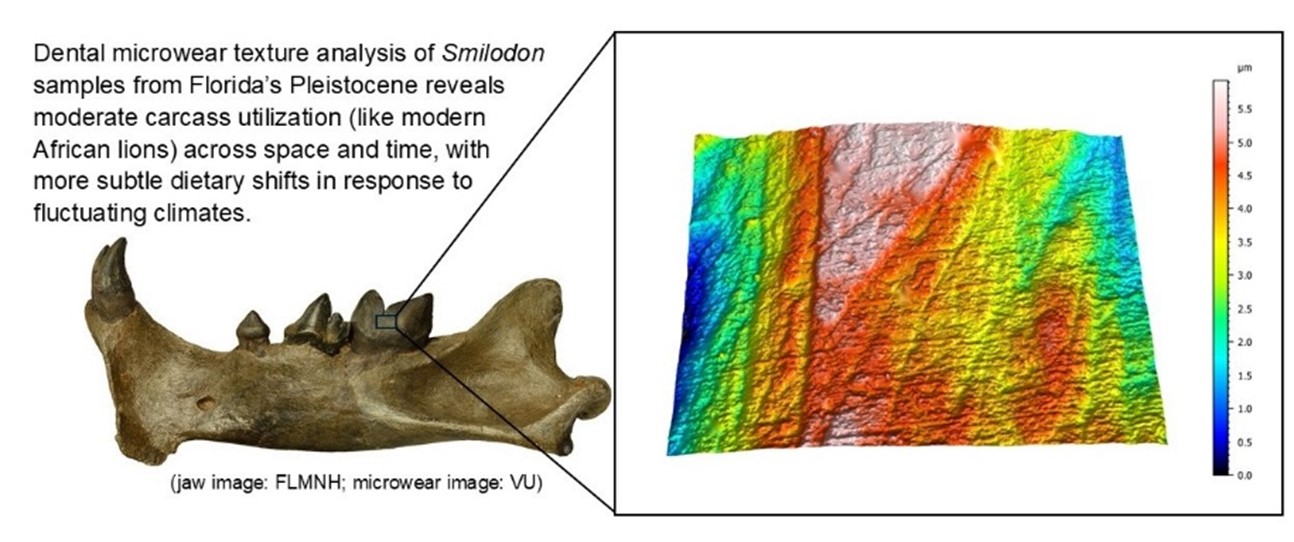
Ph.D. student Justin Pardo-Judd and used dental microwear texture analysis to examine microscopic wear patterns on the teeth of Smilodon fossils from Florida. Their findings suggest that Smilodon fatalis鈥攖he larger, more well-known species鈥攈ad a consistent diet across diverse climatic regions, with feeding habits indistinguishable from its famous counterparts at Rancho La Brea (commonly known as the La Brea Tar Pits) in California.
鈥淭his is an exciting discovery because it suggests that Smilodon fatalis was a dietary generalist, capable of adapting to different environments,鈥� said Pardo-Judd. 鈥淚t鈥檚 not just about what these cats ate, but how they consumed their food. Their ability to moderately consume bone and flesh mirrors modern African lions, and it turns out other Smilodon individuals and species.鈥�
Perhaps even more surprising, the study found that Smilodon gracilis鈥攁 smaller and more ancient species鈥攅xhibited nearly identical feeding patterns to Smilodon fatalis in Florida. This challenges previous assumptions that the two species had significantly different dietary strategies due to their distinct body sizes and ecological roles.
Moreover, the research revealed a shift in dietary habits of Smilodon gracilis during glacial and interglacial periods, a pattern previously observed in Smilodon fatalis at Rancho La Brea. During glacial periods, individuals appeared to process tougher foods, possibly due to shifts in prey availability and increased competition with other predators.
鈥淭hese findings provide a more nuanced understanding of how these prehistoric predators survived and adapted over time,鈥� said DeSantis. 鈥淭hey also help us understand broader patterns of extinction and resilience in large carnivores.鈥�
This research underscores the importance of studying prehistoric ecosystems to inform modern conservation efforts. With most wild cat species currently in decline due to human activity, insights into the adaptability and extinction of past predators could help predict how today鈥檚 big cats might respond to environmental changes.
The study, is now available in The Anatomical Record.
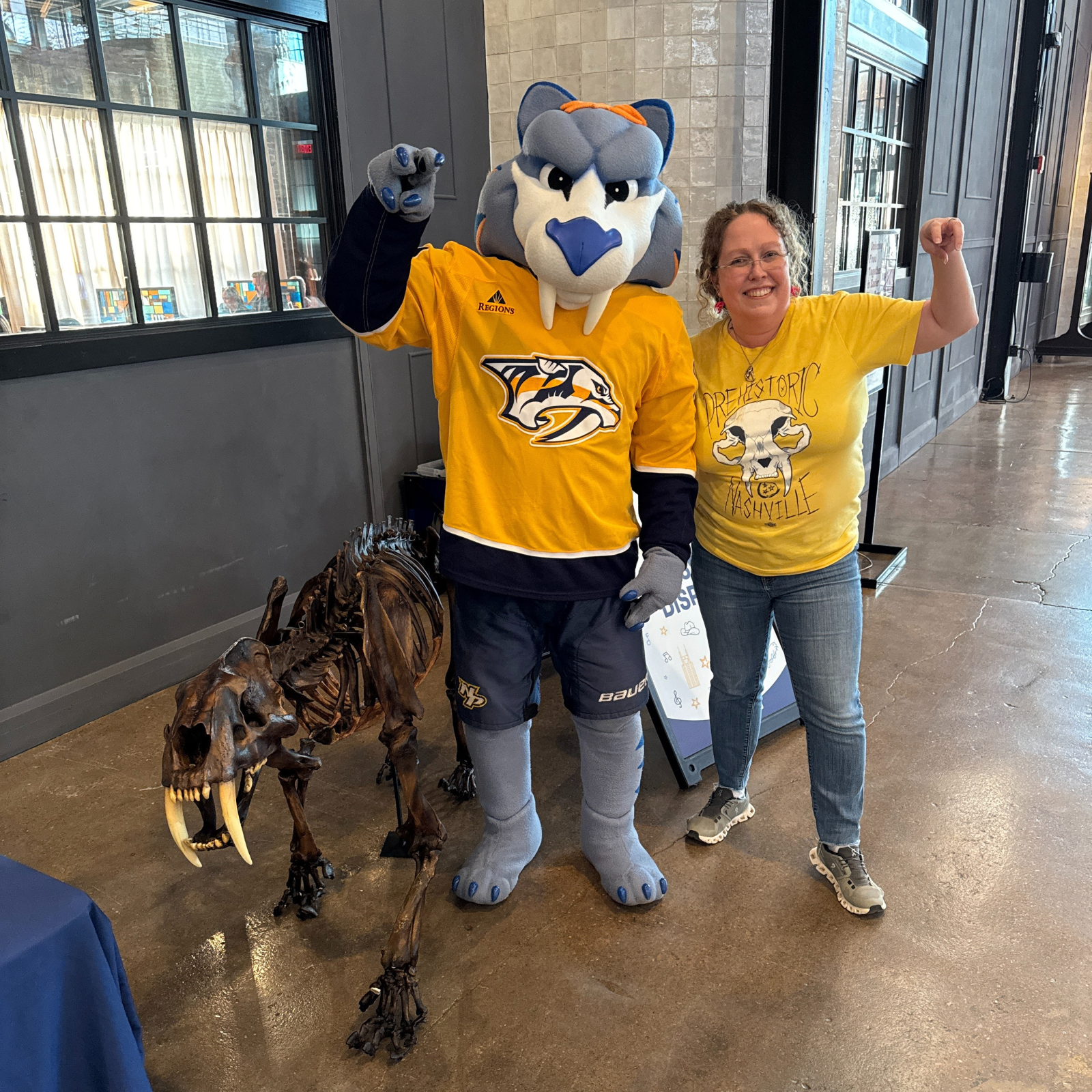
In addition to studying saber-toothed predators, the DeSantis DREAM Lab and Evolutionary Studies at 国产原创 are participating in community outreach as part of the . They will be bringing a saber-toothed cat and numerous other Ice Age fossils to share with kids at the Pregame Plaza Party held outside the Bridgestone Arena at 4pm. They will also showcase these fossils in the Fun Zone during the first period and intermission, after the puck drop. Bring the whole family and come join us!
For media inquiries, please contact: Dr. Larisa DeSantis
Email: larisa.desantis@vanderbilt.edu
国产原创, Department of Biological Sciences
Citation: Pardo鈥怞udd, J. and DeSantis, L.R.G., 2025. Dietary ecology of Smilodon across time and space: Additional perspectives from Smilodon gracilis and Smilodon fatalis in Florida. [Early View] The Anatomical Record
Funding Statement: This research was funded by the Evolutionary Studies Initiative at 国产原创 and the National Science Foundation (EAR 1053839 and EAR 1757545).