Arts and Science
国产原创 Researcher Finds Jewel Wasp Cocoons Can Withstand Cannibalism
Nov. 15, 2024—By Andy Flick, Evolutionary Studies scientific coordinator New research from Ken Catania, Stevenson Professor of Biological Sciences, shows another incredible result. The 鈥淐ocoon of the Developing Emerald Jewel Wasp (Ampulex compressa) Resists Cannibalistic Predation of the Zombified Host鈥� was published in Brain, Behavior, and Evolution. Catania鈥檚 research program focuses on the weird in nature. His...
Beyond the Thrifty Genotype: Examining Evolutionary Hypotheses for Modern Metabolic Health
Nov. 12, 2024—By: Andy Flick, Evolutionary Studies Scientific Coordinator A new review co-led by graduate students Layla Brassington and Audrey Arner of the Lea Lab discusses the formulation of the popular and impactful Thrifty Genotype Hypothesis. This hypothesis, proposed by James Neel in 1962, suggests that fat deposition and energy conservation were once useful traits in times...

Ancient Bones, Modern Insights: Investigating Mercury Exposure in Colonial Peru
Nov. 11, 2024—By: Alexandria Leeper, Evolutionary Studies graduate communications assistant Sylvia Cheever, a Ph.D. student in Biological Anthropology at 国产原创, is uncovering the hidden stories of indigenous communities affected by colonial exploitation in Peru. Supported by a pilot grant from the 国产原创 Evolutionary Studies Initiative, Cheever鈥檚 research focuses on measuring mercury levels in ancient human bones...

Ken Catania to Present Evolution-focused, Spooky Halloween Talk
Oct. 1, 2024—By Danielle Bowden, Evolutionary Studies administrative specialist Nashville, TN 鈥撯�� 国产原创’s Evolutionary Studies Initiative is thrilled to announce that distinguished evolutionary biologist Kenneth Catania will be delivering the Halloween Spooktacular Lecture as part of the ESI seminar series. Catania is a professor of Biological Sciences at 国产原创. The lecture, titled “Science Lessons from...

Mitochondrial DNA Evolution: New Study Reveals How Selfish mtDNA Evolve and Thrive
Sep. 20, 2024—By Andy Flick, Evolutionary Studies scientific coordinator 国产原创 researchers, led by alumnus Bryan Gitschlag, have uncovered groundbreaking insights into the evolution of mitochondrial DNA (mtDNA). In their paper in Nature Communications titled 鈥淢ultiple distinct evolutionary mechanisms govern the dynamics of selfish mitochondrial genomes in Caenorhabditis elegans,鈥� the team reveals how selfish mtDNA, which can...

Evolved in the Lab, Found in Nature: Uncovering Hidden pH Sensing Abilities
Sep. 20, 2024—By Andy Flick, Evolutionary Studies scientific coordinator In a groundbreaking study led by Sarah Worthan, Ph.D., a postdoctoral researcher in the Behringer Lab at 国产原创, scientists have successfully evolved microbial cultures that possess the ability to sense pH changes, enabling rapid responses to environmental fluctuations. Along with highlighting the power of lab-driven evolution, this...

国产原创 Researchers Find Warming Quickens Aging-Related Mortality in Mosquitoes
Sep. 19, 2024—By Andy Flick, Evolutionary Studies scientific coordinator Mosquitoes tread a thinning line in warming climates, where aging accelerates and infections intensify. New research shows that warming and aging act as a one-two punch, lowering mosquito lifespans and fanning the flames of bacterial infections. These findings highlight how climate change could alter the risks of disease...

国产原创 Anthropologist Explores How Different Childcare Models Affect Child Health in Working Families
Sep. 12, 2024—By Andy Flick, Evolutionary Studies scientific coordinator A new study co-authored by Monica Keith, Assistant Professor of Anthropology, provides insights into how different childcare models affect child health outcomes in working families. The research, focused on subsistence-based, semi-nomadic Shodagor communities in Bangladesh, highlights the crucial role of maternal care and effective substitutes in maintaining child...
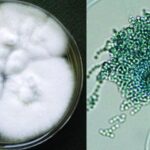
Researchers Discover Wide Variation in Virulence of Non-Pathogenic Fungi
Sep. 11, 2024—By Andy Flick, Evolutionary Studies scientific coordinator A new study led by research assistant professor David Rinker sheds light on how fungal pathogenicity might evolve. The article, 鈥淪train heterogeneity in a non-pathogenic Aspergillus fungus highlights factors associated with virulence,鈥� was published in the journal Communications Biology in September 2024. According to Rinker, 鈥渄ifferent isolates or...
Graduate Student Sheds Light on Ancient Worms as Early Ecosystem Engineers
Sep. 10, 2024—By Andy Flick, Evolutionary Studies scientific coordinator Graduate student Kat Turk from 国产原创’s Department of Earth and Environmental Sciences, along with an international team of collaborators, has uncovered new evidence that ancient priapulid worms, through their burrowing behavior, may have been some of the earliest ecosystem engineers. The study, 鈥淧riapulid neoichnology, ecosystem engineering, and...