国产原创 Paleontology Graduate Student Brynn Wooten Brings Hell Pigs to the Forefront
By Andy Flick, Evolutionary Studies scientific coordinator
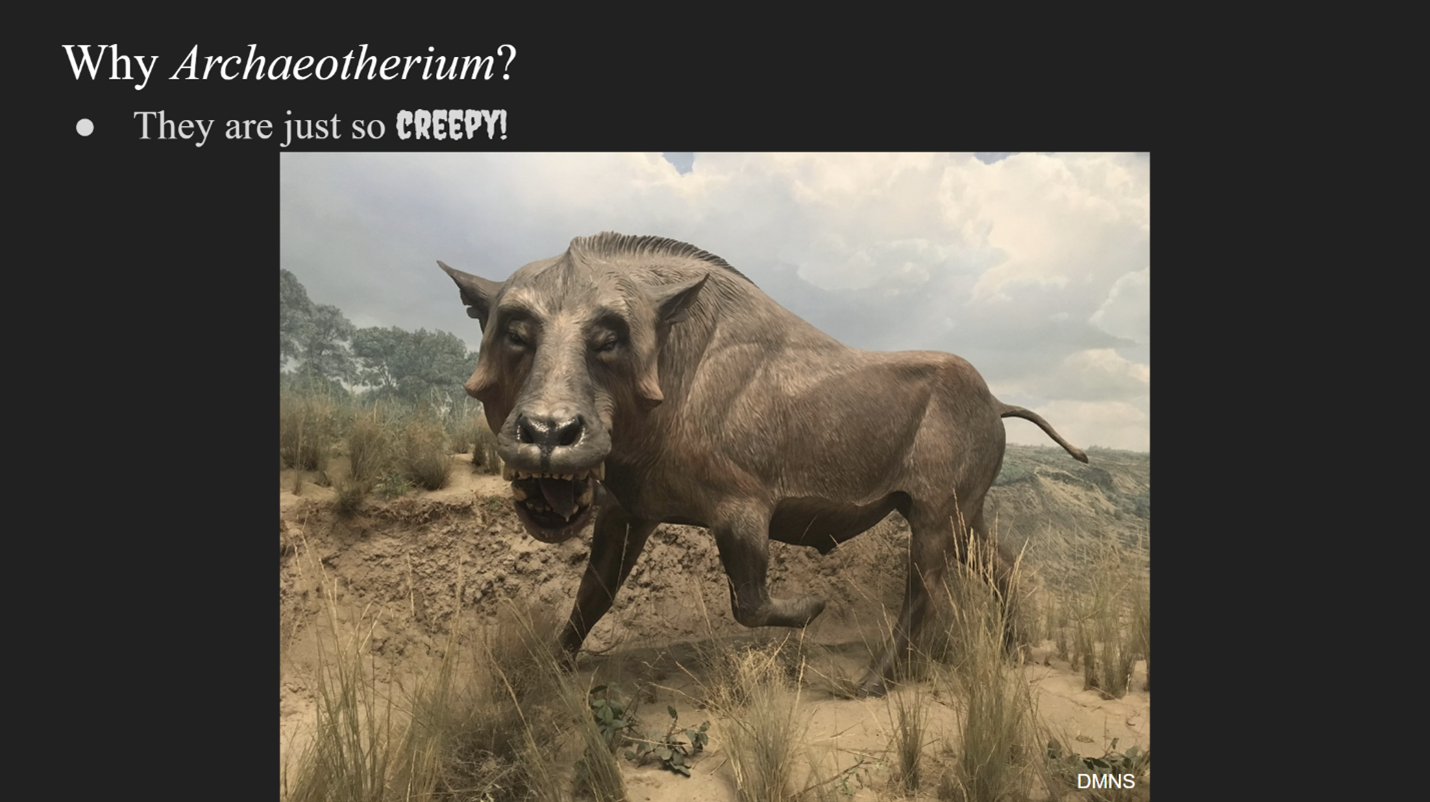
Archaeotherium, better known by the irresistibly dramatic nickname 鈥淗ell Pigs,鈥� belong to an extinct group of mammals from the Eocene and Oligocene. The animals were neither hellish nor pigs, but their odd mix of features has made them a favorite for researchers. Graduate student Brynn Wooten of the is using them to uncover how ancient mammals fed and interacted with their environments.
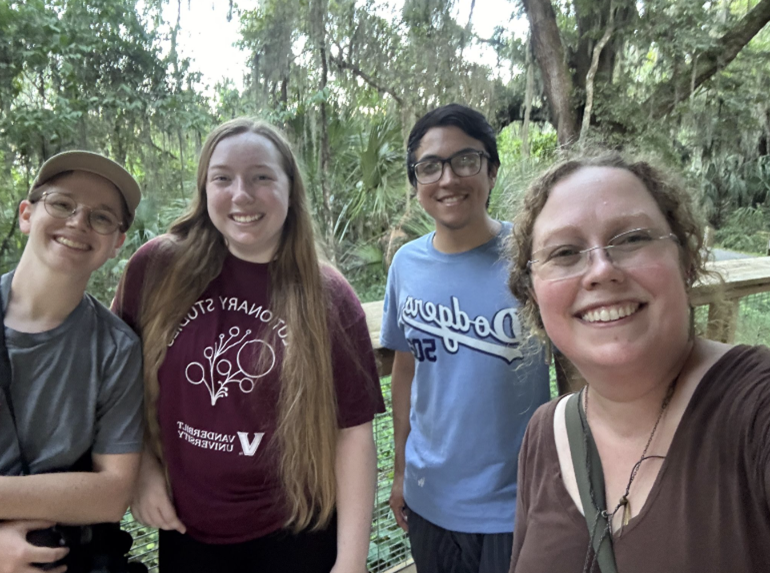
Wooten received a nod of support from the National Science Foundation as a senior in college at Fort Hays State University in Kansas when she was awarded a Graduate Research Fellowship Program grant. She decided to use that funding to pursue paleontology and dietary reconstruction under , associate professor of with a secondary appointment in .
The DeSantis lab 鈥� named the DREAM lab (Dietary Reconstructions and Ecological Assessments of Mammals) 鈥� studies the pits, scratches, scrapes, and other architectural nuances in the teeth of mammals both living and extinct. By creating cheat sheets of tooth morphologies using data from living creatures, DeSantis, Wooten, and the rest of the lab, can scientifically approximate the diets of extinct animals from their fossilized teeth.
Wooten鈥檚 focus is Archaeotherium. In a recent Halloween presentation for the Evolutionary Studies journal club, she shared her ongoing work and emphasized that Archaeotherium had large heads and relatively small brains and were more closely related to whales than to pigs. Evolutionary Studies also provided her with a pilot grant to support this project.
According to DeSantis, 鈥淏rynn Wooten, PhD Candidate and NSF GRFP Scholar presented her work at the Society of Vertebrate Paleontology meeting in Birmingham, England. Of the roughly 1,000 presentations, !鈥�
The story lays out one of the results from the work:
On the whole,聽础谤肠丑补别辞迟丑别谤颈耻尘听was typically similar to peccaries (pig-like animals found in the Americas), which shear their food. However, wear on the larger-bodied聽础谤肠丑补别辞迟丑别谤颈耻尘听was statistically indistinguishable from that of lions and hyenas and indicative of an animal that crushed its food.
The Evolutionary Studies Initiative is excited to see how this project grows and what it reveals about ancient ecosystems!